The tells of a good toolmaker
We learned a few things over the last 3 years.
Will keep it short because it's likely you're evaluating toolmakers (mould makers) for the first time and want a simple guide. You can get to the details as you speak with more people in the industry or available online guides too.
Send one drawing to five toolmakers and get the quotes.
The best tell is typically an argument. A shop that has produced enough projects of critical deliverables comes back questioning your part: this wall will sink, this corner needs draft, this tolerance is unnecessary and will double your cost. The good vendors do this in the first quote, sometimes as marked-up screenshots of your own file. If a shop that returns only a number has either not read your drawing or not cut enough tools to see what's wrong with it. Or they have shipped enough mediocre stuff that the clients didn't have problems with.
The steel has a name and a shot count. A serious quote states the grade, the hardness, and the number of shots the tool is guaranteed to run, in writing. If the quote says good steel, ask again. A shop that won't commit to a shot count is telling you who carries the risk. You.
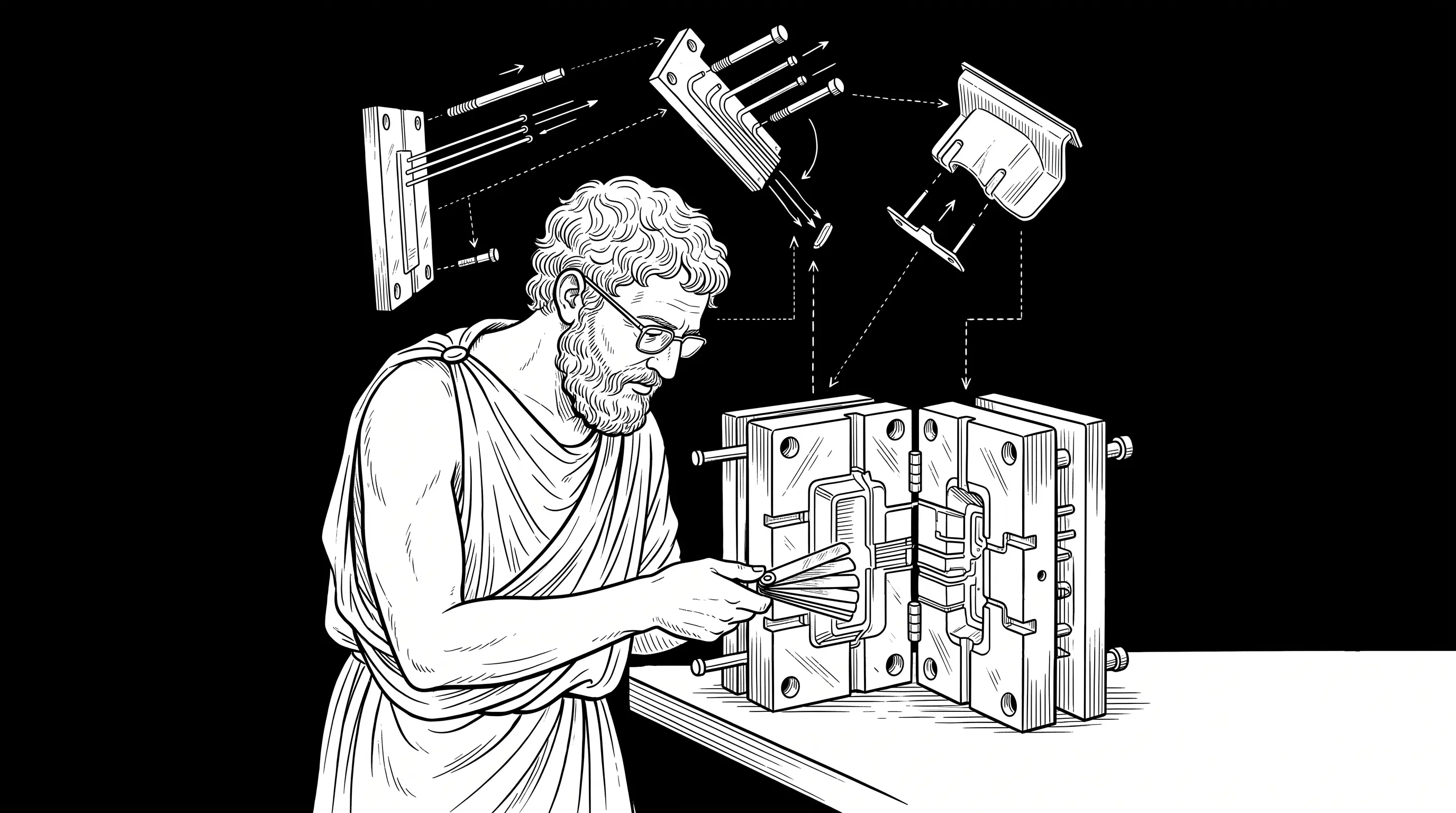
The insides of a tool come from a catalogue of parts. Good shops build around standard bases, pins, and ejectors that exist in a book with part numbers. When something breaks, the replacement is ordered, not remade by hand. Bespoke everything sounds like craftsmanship. In a tool it's a big red flag: every repair becomes a project which will delay your project from the get go.
Mould-flow simulation are a given. They show where the plastic flow will struggle, where it will weld, where it will warp, before any steel is cut. The software is expensive and pays for itself across hundreds of programs, which is exactly why high-volume ecosystems run it by default and a shop doing less tools a year cannot justify it. So someone who's charging you extra is a red-flag.
We have worked with both Indian and foreign tool shops. We prefer tooling vendors from outside India for critical parts. But it's not the talent. Indian shops have superb machinists. The gap is structural, and it has three parts. Iteration: a Chinese shop can run more programs in a year than a small Indian shop sees in ten, and every habit above is formed by repetition. Ecosystem: the catalogue supplier, the heat-treatment plant, and the steel trader sit within an hour of the machine; in India each of those can be a freight booking. And buyers: shops optimise for whatever their customers measure, and the Indian buyer has mostly measured one thing, the price.
Shops become what their buyers measure.