Offcuts
I write what I wish was written.
About two years ago, I got to spend about ten days with folks from my team in Pune. One of the things I remembered fondly from that trip is the deep Malvani and Maharashtrian thaali indulgences we had. Every night, for dinner, we'd find a spot from recommendations of a colleague's friend and eat our hearts out.
Living in Bangalore, I miss that food.
Earlier this year, Nandini mentioned about Suryawanshi. Her colleagues were raving about the place. One Sunday, not too long ago, we were in the Church Street area and I spotted one of their outlets. The following Sunday, I ordered in. They were good.
As I was bookmarking places for our upcoming Kolkata visit on Instagram, I saved the ones I had known since childhood and the ones I found on Instagram were about 20% of the places I plan to visit.
You see… the recommendation engine doesn't have an opinion. It'll surface what would make sense for a newbie. But it can't get the specific thing about how I like Lakkhan da'r aloo kabuli, or Shayamnagar bajarer jol porotha, or even Sodepur railway bridge er tolaye radhabollobi. They don't have an app or rating; just a long queue outside. Even Suryavanshi in Bangalore didn't come to me through an app recommendation but just word-of-mouth.
Food is just one example. Spend long enough time with the recommendation engine and you'll lose the muscle of liking something on your own. The small wrong steps of taste, the part where you reach for a thing you do not know why you reach for, had been bypassed. I had been delivered to a thing. I had not arrived at a thing. The arrival is what makes the thing yours.
Find things you like that the recommendation engine does not know you like. A particular way of cutting a mango. A particular street to walk on. The specific dimsum seller at the corner of 80ft. road.
It's possible that in 2028, "what do you like that the app does not know about" will be a real question on first dates. The people who can answer will be a smaller group than you think.
In 2026, if all AI-models disappeared tomorrow, who would I be?
There is a version of you that exists with the model in your pocket, and a version that would exist without it, and the gap has gotten wide in the last two years, and you have not measured it, because you have not had a reason to.
A writer would probably say that they'd write less and would write their stuff slower. It'd also be worse for the first six months. And then, maybe, it would be better. They might not have the patience left to wait the six months.
The question is not academic. It is the year ahead in compressed form. Whatever the answer is, that is the work.
There's another version. If the AI-models disappeared tomorrow, would the people who admire me for work or the things I'm doing today to brag my problem solving skill or building skills still recognise me? If the answer is no, you have a year, maybe eighteen months, before they do not.
The little walk we get to do on a given week to the sabziwala or the walk from the metro, or a post-dinner routine in the nearest park doesn't happen in silence. There's the noise from traffic, cars honking, sometimes people talking, and a lot more from the distant chatter at a chai stall.
So we gave in to podcasts, calling a friend
Most of us, in 2026, no longer know how to walk somewhere without something in our ears. The walk to the sabziwala. The walk from the metro. The silence has become unbearable.
This week, before next Sunday, walk somewhere without your headphones in. Twenty minutes. Once.
The walk is not for thinking. The walk is for nothing. If you come back with nothing, the walk worked.
You will hate the first ten minutes. You will reach for the phone twice without realizing your hand is reaching. You will start composing a tweet about how strange it is to walk without headphones. Your mind, denied a podcast, will offer to be one.
Don't be a podcast.
Around minute eleven, something will shift. You will notice the horn of the auto. The bird. The woman selling jasmine outside the temple. The headphones were not just adding sound. They were subtracting the world.
A few of you will, on minute fourteen, have a thought you have been avoiding for months. I should leave the job. I do not love him anymore. It has been waiting for the headphones to come off. Don't reach for the phone. Let it sit next to you for the rest of the walk. The shape is the work.
By 2032, the people who walk without headphones will be obvious to each other. They will know the name of the man who sells the tomatoes.
Be one of them.
The most taboo thing a person can do in 2026 is have an experience and not tell anyone about it. Simple. This means that one would live an hour, a slow Sunday afternoon, have great coffee at home, take pictures with visiting parents, get on a long call with your dadi, and not let it become content. These lived moments do not need to become something except the actual thing it was. The lived moment doesn't need to be 'repurposed.'
I know a lot of people around me who already do this. And then a some who don't do this. Become the kind of person who can have something happen and not tell anyone.
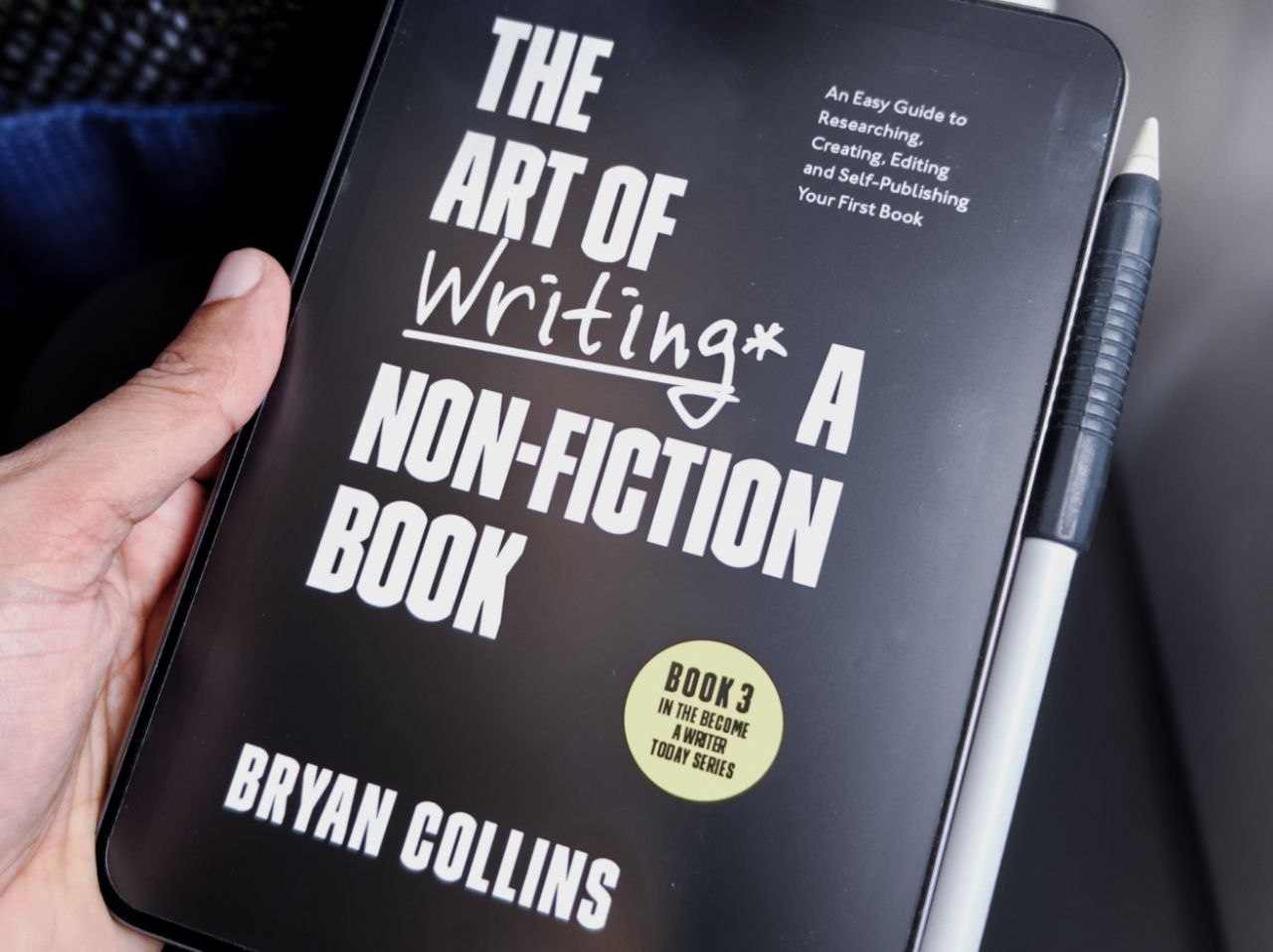
Somewhere over Rajasthan, I opened the Kindle app on my iPad mini and started reading a book I'd just bought. This is my second time leaving paper. I own over 800 physical books now. The shelves at home are full. Unfortunately, the floor stacks have become their own piece of furniture. It has its own beauty but it's borderline messy.
The arc of my reading journey, if you're interested is as follows. In February 2017, I gave up on paper and bought a Kindle Oasis. It was my first Kindle device and I got the Oasis instead of the Paperwhite because I wanted the light one with longer battery. I immediately fell hard for it. I also made a sensible rule — physical for illustrated or graphic books, digital for everything else. You know if you travel with a couple of books, they cross 3kg easily, which is the sort of fact you learn when you're the one carrying them and find yourself moving to the cabin bag at the check-in counter.
Five years in, 2022, I drifted back to pens, highlighters because… there's a specific satisfaction of dog-earing a page. I sold the Oasis and went full paper again. Bought more books than any single human should own in a country where we pay rent by the square foot.
During my last trip packing, I pulled four books off a shelf for a two-week trip, weighed the bag, put three back. I packed the thinnest one and finished it on day two.
Which is how I ended up here, at 35,000 feet, opening the Kindle app again.
No Kindle device this time. This time it's my favourite iPad mini with the pencil for notes. Goodnotes in split view occasionally. On the iPad with a matte screen guard, it feels like writing. Will apply the same rule as before — illustrated books stay physical, everything else goes digital. This time it's just a different device.
I hope this sticks.
A few weeks ago, at the airport lobby, I picked up the Fortune magazine (India edition) from the bookstore. The cover story was compelling - The star designer who's reimagining Samsung. Followed by another - The world's most admired companies.
This was around the time when I was reading and putting together my South Korea & Samsung blog post.
Samsung electronics has hired Mauro Porcini as Chief Design Officer who's previously led design at 3M and PepsiCo and started his career as a product designer at Philips. He recalls moments from 3M where he was pissed at the fact that his designs were beautiful and functional but the packaging and overall retail and digital experiences were ugly. He pushed them to be done in the proper way which naturally pissed a lot of people there especially because doing this bit wasn't part of his job description.
He also put a simplistic approach to split responsibilities cleanly where designers come with human-centric approach, marketing with business, and R&D with technology on the table.
The article also covers the transformative story of Samsung all the way up to how they treat design today. For instance, Samsung executives assumed customers cared only about video and audio quality in televisions while the designers argued how TVs look is equally important since the TV spends more time off than on making it more like furniture than source of entertainment. Samsung's Frame TV was born as a result of that argument.
Porcini will now focus on making consumer devices from the ground-up given the ruling age of AI. He'll build towards devices that no longer need to adhere to the known form - the phone doesn't need to look like a smartphone at all. Today, it's important to bring more human into the equation since AI and robots will eventually become a commodity.
Earlier this month, for a long 10-hour+ journey, I printed a 4,000-word essay (from Substack) to read on the flight. I just didn't want to read it on the screen (phone or tablet).
I've been doing this more lately. Now, I read physical books and trying to switch to ebooks between 2016-2019 on a Kindle didn't help. Something about the screen has started making me feel like I've read something but keeping a slow pace to absorb properly becomes ridiculously difficult. It makes me just want to keep scrolling. I don't have a clean explanation for it but I notice the difference.
I still write on the blog. That part isn't changing. It's where I figure out what I think before I know what I think. But I've started wondering whether a 2000-word post is the right delivery for ideas that are better shown than described. The person I want to reach in India in 2026 is probably more likely to watch than to read. I've been thinking of using AI more often to convert these into polished short YT reels so the blogs get more reach. Then the time required to polish them to achieve visuals as I want becomes a task. Maybe someday. I haven't started that and will probably figure out as the year progresses.
A few weeks ago, I split my social accounts into three spaces (for now). A private Instagram album. A public Instagram workshop, and something on LinkedIn that doesn't make me cringe. Honestly, I don't know how to use that platform beyond the occasional hiring posts.
I've had @one.more.colour on Instagram for years. I'd use it haphazardly by sharing (uploading) things when I remembered to while scrolling through the phone gallery. Nandini, my wife, keeps poking me, "your relationship with social media is complicated." Here's my new thing. It was obvious that phone cameras replaced the physical album so we kept on capturing everything and revisiting nothing. My phone is a graveyard of thousands of photos I don't look at. I want to undo some of that. I am turning it into something closer to what families used to do with physical albums before camera phones existed. They would print a selected set of photos, walk through different phases of life, revisit a beach vacation or a school year or a house move. The album was for themselves and a small circle.
I removed 2,200 followers from this account because I want it private. I kept only the people I am genuinely comfortable sharing my life with. My ideal future version of this is what I half-jokingly call a 'zero gallery.'
@godgeez is the public Instagram account. I share my work at Native here along with the stuff I find inspiring and some other things I keep creating. Like the private account, I've not treated it with attention. I hope to turn this account into a loosely linked set of set of themes across hardware, systems, design judgment, and building in the real world. The build journey of Native products and the trade-offs we make. A lot of "this failed, here is why" moments that I find myself thinking about for weeks afterward. I hope to make this is a better working log to share the journey with other builders.
I wrote my first blog on Blogspot. I think I was in standard 10th, 2004. Then Orkut through college, then Facebook, then the rest of it as the years went by.
Looking back, that early era felt like something. Everyone I knew (school friends, college friends, mutual friends, crushes) were in one place with their life updates, photos, and I was looking forward to opening the tab just to see what had happened. It was like a shared living room where you could drop in anytime and somebody would be there.
Two decades later, that feeling is completely gone.
I can't quite articulate what changed but I can feel it every time I open the apps now. It's tiring before I've even seen anything. Something shifted at some point and I missed it happening. And now I'm standing in what used to be the living room and it's turned into a casino.
I'm not going to throw my phone into a lake. I'm also not writing one of those posts about deleting all my accounts. What I'm doing is more boring: figuring out what I actually want from these platforms, and redesigning my presence around that instead of around whatever the algorithm prefers or what trend bandwagon the world has moved on to. I intend to redesign how I use these platforms from the inside, with some actual intention behind the decisions.
I split my online presence into three spaces. A private Instagram album. A public Instagram workshop. A hardware journal on LinkedIn. Each with a specific job and goal.
The moment we get bored, we reach for a screen. Ten seconds later, dopamine hits. A hundred swipes later, nothing. We mistake stimulation for satisfaction. There was a time when an empty evening meant sketching, tinkering, fixing, or just making something dumb because it felt good. Now, “free time” means doing what everyone else is doing: consuming.
Then came the “monetise everything” era. Can’t paint without someone asking if you sell prints. Can’t bake bread without being told to start a channel. The second money enters, curiosity leaves. We’ve forgotten how to do things that don’t scale.
A hobby feeds you back. You finish a session and feel different, you feel less tense and more alive. Most of what people call hobbies today are just distractions. Scrolling isn't a hobby. Shopping new shoes, coffee grinders, pens isn't a hobby if the excitement ends at unboxing and you're not creating anything. Even fitness streaks aren't a hobby if it's just for scoring health badges. It is if you're learning form, building strength and routing. Uploading photos daily, checking likes. If you're posting, writing, shooting, because you care about the work, then it's a hobby.
Hobbies are important. They give you competence and flow. They’re proof that your hands and brain can still cooperate without an app telling them what to do. When you’re learning to play an instrument, shape clay for pottery, or roast coffee right, your brain shuts up. You stop running background tabs in the mind. You stop checking who’s watching. That peace is what hobbies give you.
If you don't have one, cut the noise first. No phone. No Netflix. Sit with boredom long enough that you start itching to do something. Anything. You can learn guitar chords, knife skills in the kitchen, code a small utility tool, shoot and edit photos. You can explore the locality by walking with a camera, sketch in a museum, hike a new trail, or go somewhere new.
Remember, you were built to make, not just consume.
Last year when we visited Copenhagen to see architecture marvels of Bjarke Ingels (Nandini's favourite architect), I got a bit interested in unconventional yet supremely functional architecture. I came across Frank Gehry's work as well… especially his sketches.
After watching sketches of Frank Gehry, I realised how his workspace was like a playground. Full of materials, sketches, papers all around, models to mess with. It wasn't meant to make you sit behind a desk but rather made you feel like experimenting and test new ideas quickly.
IDEO, the design firm, encourages open spaces, movable whiteboards, and materials accessible all the time. IDEO’s offices had portable whiteboards on wheels, enabling teams to brainstorm anywhere. A movable workspace! How cool is that?
Yves Béhar from Fuseproject who designed for Yale, August, Coway, Tile, Jawbone and many more designed his studio to nurture innovation, much like Frank Gehry. His workspace is a mix of screens, physical models, and natural light!
For my personal workspace, I took a lot of inspiration from Stephen Wolfram's (creator of Mathematica, Wolfram Alpha and Wolfram language) productive desk setup. Here's some documentation on how we went about designing Urban Company's Bengaluru office.
Additionally, these books I referred to (mostly excerpts & videos):
I don't think of workspaces as just places for work — it’s where ideas are born.
A chef's first job is to feed someone. The customer comes and eats the food served. Over time, the chef would keep practicing preparing dishes to recall a childhood memory perhaps. May be how a drumstick curry tasted on a rainy afternoon. The moment is so valuable that they'd want to share it with a guest and welcome them to join them on that rainy afternoon. That's self-expression of that chef. The moment the chef stops feeding and starts sharing is when design ends and art begins. That's where the best cooking lives too!
A designer building an appliance with a light‑glow feature to indicate a function might simply use an LED strip with a warm colour temperature to get the job done. But the designer may also want to express the feeling of warmth, homeliness, and safety they remember from being a child at home at 6 p.m. They want users to feel that same way when they buy the appliance for their own homes.
History remembers the Eames chair, the Braun T3, Leicas, the original Mac, and the list goes on. They are art pieces. Nobody remembers the 'ergonomic home office chair' that topped usability testing in the year XXXX. History is a great filter. It has always preserved objects that make you feel something and discarded the ones with only functions.
Design solves a problem. Art is self-expression. Art is what history will remember. It comes from living with enough texture of experiences that it eventually bleeds into the work you're doing. Live a life worth designing from.
When you start working on a piece that requires designing, it's only natural that we 'research.' It's not always the right decision. What most designers are educated in is research or benchmarking that trains you to arrive at what already exists. In other words, it's derivative work. They keep gravitating towards those methodologies. And derivative work is safe because it's defensible - you have all the data, after all! Original thinking will naturally feel risky because you'll be the only one holding it.
It's important that you hold a point of view. It's a muscle you build. It's like building grip strength with pull-ups.
I have many examples of this. To name a few, there's Teenage Engineering who make extremely opinionated products. Folks I know who own a TE product don't remember signing up for a TE user survey or having a preference for what kind of keyboard they'd have liked to own. Dyson's latest air purifier is a decor object. That design wouldn't have come from benchmarking other air purifiers. It's probably cross-domain imagination.
Learn to imagine. Ban yourself from looking anything up on Pinterest until after you've sketched 10 directions. See what you instinctively knew vs. what you borrowed. Design what the object could look like if its obvious assumption is no longer true - like one generation forward version. Question and learn the why and how of objects. Why this particular shade of grey? How one arrived at this particular shape of stapler or door handle?
Doing activities like these regularly will feel unnatural to folks who default to what's been taught to them. It'll feel incomplete, uncomfortable at first. That's the point. Train anyway. Build opinions and, more importantly, do the hard work required to build them.
Remember this. There are thousands of people who were trained in school to follow a certain set of things, just like you were. Yet, as a whole, we haven’t produced that many great products. There must be a pretty good reason for that.
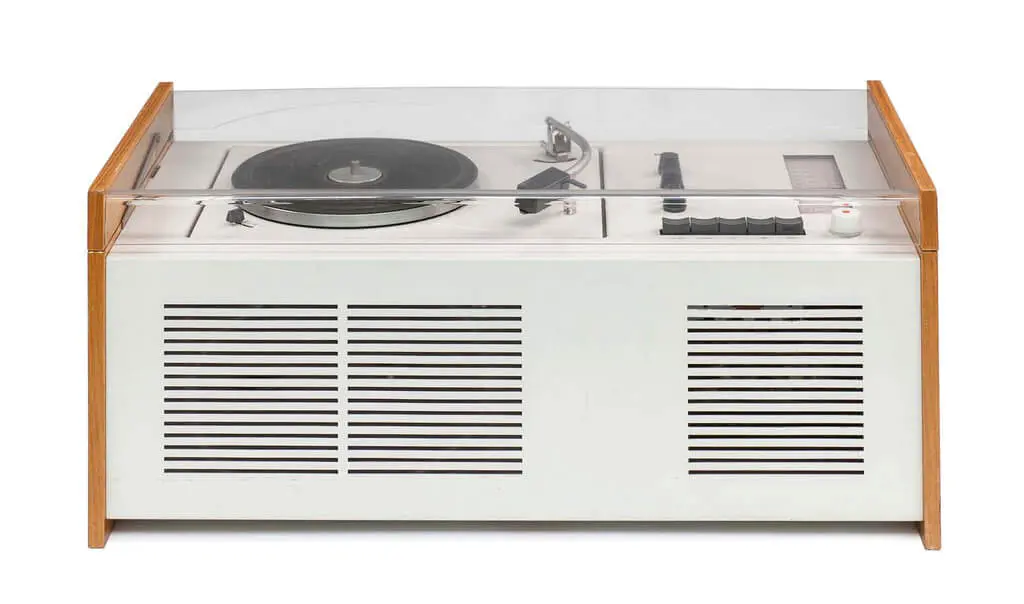
The Braun SK-4 phonograph from 1956 did something that sounds obvious now but was radical then: they stopped treating consumer electronics like furniture.
Stereo consoles at the time were heavy wooden cabinets that mimicked domestic furniture and happened to play music. Big gold buttons, orange-peel textured front panels with ornate housings. They were designed to look expensive and blend into traditional living rooms. Retro indeed.
Gugelot and Rams approached it differently. They saw it as a sound machine and designed it accordingly. They replaced the wooden housing with metal and plastic because wood muffled the sound. They restructured the whole unit along a horizontal axis based on technical function. They also stripped out the decorative elements entirely moving to neutral grey and white without luxury accessories.
The press called it "Snow White's coffin" because of the transparent plastic top. It looked nothing like what people expected a radio to be.
The industry then was trying to 'style' the product by dressing up existing technology to fit in homes. Rams 'designed' it to take a form that the technology actually needed. The SK-4 became the standard for Braun's approach and influenced consumer electronics design for decades.
I've started recognising AI writing. They all sound the same no matter who's writing them. They are fairly structured. I’ve been reading for decades. Books, essays, old blogs from RSS days when people wrote badly but honestly. Everyone had what you'd call rough edges in their writing. Now I open LinkedIn and Medium and Substack and it’s like the same person learned to write and decided to speak through all of us. The writing, articulation, voice, perspectives doesn't evolve with time anymore. Topics change but the core craft of expression remains the same now.
Sometimes what gives it away isn’t grammar or em-dashes. It's lack of deep opinion, lack of a concrete point or even how the writing sounds in your head. This AI slop is everywhere now and even in performance reviews folks write before their appraisal cycle.
Folks who are fragmented and struggling on Slack write well articulated long and descriptive versions of their work for performance reviews. Everyone suddenly upgraded in writing and penmanship.
Technology isn't the problem, of course. Maybe we stopped valuing substance and voice as long as it's something acceptable. In that chase, we're making everyone sound identical.
Rituals are great. Once the things that I feel like doing become more frequent in a given week, they start becoming rituals. Almost like brushing your teeth. I've never created a vision board in the past. Sure there were rough goals in my head for the year ahead but never printed out on a pegboard above my home desk.
This time, I wanted to focus a lot on a few things I wanted to do and keep as a constant reminder and some more that I wanted to bake into my day-to-day more frequently. Constant reminders like going to a distant place with my wife on a long drive. Rituals like using my iPad mini specifically for writing these short notes on Feed, sketching, and using Garage Band to make music.
On a separate note, I've found an all new way to use Instagram. I open it probably for 20ish minutes to consume inspiration and bookmark a lot of music & drum tutorial reels along with some inspiration stuff and occasionally send memes. However, I'm converting into my Flickr. I upload photos I want to keep or remember and delete them from my phone gallery. That way whenever I want to go down the memory lane or show someone something, I go to my Instagram than the dump yard ocean of phone gallery.
My air conditioner is smart. Which means instead of just turning it on, I need an app. The app needs an account. The account needs verification. The verification email goes to an address I haven't checked since 2019. By the time I'm logged in, I could've just walked over and pressed the button. The app sends me notifications. "Your room has reached 23 degrees." I know. I'm sitting in the room. I can feel degrees. The refrigerator also has an app. It takes pictures of what's inside so I can check remotely. Except the camera angle is weird and half the shelves are blocked and I still have to open the door to see if I have eggs. The app tells me my vegetables are expiring. I know this because I put them there three weeks ago and forgot about them, which is a problem the app hasn't solved. It's just made me feel worse about it digitally. The fan in my bedroom connects to my phone via Bluetooth. Sometimes. Other times it just blinks at me angrily until I restart everything including my will to live. There are five speed settings accessible through the app, which is slower than just having a dial I could turn with my actual hand. But we don't do that anymore. We don't use our hands. We use apps that crash, require updates, and occasionally just decide they're done communicating with the device that's three feet away. I've got nine apps to control appliances that used to have switches. Each app works differently. Each has different login requirements. Each promises convenience while delivering the opposite. Yesterday I tried to turn on the fan. The app said "device not found." The fan was running. I could see it. The fan knew it existed. The app disagreed.
You've read seven books about productivity. Maybe twelve. You know the Pomodoro Technique, time blocking, deep work, atomic habits. You've highlighted passages. You've told yourself "this one is different." And yet this morning you spent forty-five minutes scrolling instead of doing the one thing you actually needed to do. Because reading about productivity is its own form of procrastination, seductive as hell because it feels like progress. You're learning! Improving! One book away from having your life together. Except you're not. Reading about doing things and actually doing things are separated by a chasm so wide you could fit all your good intentions in there and still have room for everyone's New Year's resolutions and expired gym memberships. You read about minimalism while your closet overflows. You read about better habits while eating cereal for dinner three nights running. You know what you should do. You've known for years. The information isn't the problem. You don't need more information. You need less. But implementation is hard and boring and doesn't give you that dopamine hit of "aha, THIS is the answer!" Implementation is just you, alone, doing the thing, with no revelation, no YouTube productivity guru promising transformation. So you buy another book. Another system. Another app. Another framework that'll definitely work this time. And maybe it would. If you actually did it instead of reading about doing it better. Here's what nobody puts in the books: the gap between knowing and doing isn't an information gap. It's a courage gap. No amount of reading builds that bridge. You have to walk across it. Badly. Awkwardly. So here are your instructions: Close the book. Pick one thing. The thing you've been avoiding. Do it badly. Do it scared. Do it for ten minutes. Don't read about it. Don't optimise it. Just do it, and let it be imperfect. Tomorrow, do it again. That's it.
I've been writing this thing for 30 minutes. Deleted it twice. Started over four times. And the whole time there's this voice in my head asking "who's this for?" If it's for me, I can say anything. When I write for myself, I can say anything. The weird dream about the talking refrigerator. Why pigeons are just flying rats. Nobody's grading it. Nobody's expecting profundity or insight or a thesis statement. It just flows. Stream of consciousness, no filter, probably terrible but it's mine. I'm not trying to be interesting or funny, or relatable. I'm just thinking out loud with a keyboard. And that's when the good stuff happens. The honest stuff. The thing that makes you go "oh, I thought I was the only one who felt that way." But then I start thinking about craft. About structure. About whether this is even worth reading. And the second I do that, everything halts. Because now I'm performing. Now I'm wondering if I have a point, if I'm getting to it fast enough, if anyone cares about my sandwich theory. The act of considering an audience kills the thing that makes it worth reading in the first place. So I've decided something. I'm writing this for me. Just me. If you happen to be reading it, that's between you and whatever algorithm or impulse brought you here. But I'm not writing TO you. I'm writing NEAR you. Like someone talking to themselves on the subway. You can listen if you want. Or not. Either way, I'm saying the thing about the pigeons. They really are just rats with wings. Anyway, I think I'm done now. Or maybe I'm just tired of thinking about whether I'm done. Same thing, probably.
There are two hundred plus unread books on my shelf. I know because I counted them a few months ago to keep a directory on my website instead of reading any of them. I bought most of them because I genuinely intended to read them. Past tense but intended. Some I bought because a lot of folks on YouTube said I had to read them. Some because the cover looked smart and I wanted to be the kind of person who reads books with covers like that. A few because I was in the bookstore and buying books feels like self-improvement without actually having to improve yourself. It's like joining a gym. The membership makes you feel healthy. Actually going is optional. Here's what I tell myself: I'll read them eventually. When things slow down. When I have time. When I finish the book I'm currently not reading. Still, I keep buying new ones. Last week I bought two more. I walked past these unread books to make room for them. I don't borrow because I make my books dirty and borrowing a book has a deadline and my relationship with reading is apparently allergic to external pressure. Because ownership feels like progress even when the books just sit there judging me. The bookshelf is now less a library and more a monument to who I wish I was. Which is fine. We all need monuments.
So you design this machine made of plastic, right? Looks beautiful in CAD. Perfect curves, clean lines, everything snaps together like LEGO. Then you start adding the stuff that actually has to go inside. The PCB needs mounting bosses. Okay, add four posts. Wait, the battery sits there, move two posts. Now the second PCB has nowhere to go. Fine, cut a grill, but not too many holes or the plastic gets weak. Oh, and we also want the logo backlit, so now you need a light guide, which means a cavity in the tool, which means a slide, which means money. And don't forget the screws. Six screws holding the two halves together, but they can't go just anywhere because there's a touch PCB ribbon cable running right where you wanted screw boss number three, so you move it, but now the snap fits aren't balanced and one corner feels mushy when you press it. "Can we make this edge sharper and straighter?" No. "Why not?" Because injection moulding, because draft angles, because we live in a physical universe with physical constraints. Then there's the IML film that's supposed to sit flush but keeps getting undulated surfaces during lamination at the edges, and the internal chassis that was supposed to be a perfectly moulded part but got A-surface sink marks which is not acceptable. The PCB and IML needs modification now because screwing will leave air pocket, which makes the touchscreen registration drift, which means recalibration, which means firmware changes, which means another meeting. By the time you're done you've got an assembly with forty-seven components and if even one screw boss cracks during drop testing the whole thing has to be redesigned. My innocent relative asks what I do for a living. I tell him I make things that fit together. He says "like puzzles?" Sure. Except the pieces keep changing shape and everyone has opinions about what the picture should look like and also it has to cost hundreds of bucks less than last year.
Started reading The machine that changed the world on Toyota’s lean manufacturing. Toyota's advantage wasn’t speed in the way we usually think about it. Today, we do things like moving people faster, shouting louder, or squeezing more hours out of the day.
On the other hand, what Toyota did looked slower on the surface. They did smaller batches with more stops and checks. They did those to stop problems move forward. Western factories treated defects like a cleanup task. Build first, fix later. Sort of like what we do today.
Toyota treated defects like poison. If something went wrong, the line stopped. That sounds extreme until you realise what it prevents. When defects travel, they compound. Toyota’s insight was simple: stopping early is cheaper than fixing late. And more importantly, stopping teaches the system where it’s broken. This flips the usual logic that we inherited from the West. Instead of rewarding uninterrupted production, they rewarded uninterrupted correctness. It’s uncomfortable because it forces problems into the open. Most organisations would rather hide them until the end.
When you start anything new, forces pull you in multiple directions. There's stuff you could do, stuff you want to do, and stuff you have to do. The stuff you have to do is where you should begin. Everything else is distraction disguised as preparation. If you're launching a power drill, you could obsess about packaging design, warranty card formatting, instruction manual translations, branded carrying cases. But the first thing requiring attention is whether the drill actually drills holes cleanly and reliably. That's the epicentre. Everything else is secondary.
Ask "If I took this away, would what I'm selling still exist?" A power drill without fancy packaging is still a power drill. Some customers won't like it, but the core offering remains intact. A power drill that doesn't drill holes properly isn't a tool. So figure out what can't be removed. If you can continue without something, it's not the epicentre. When you find it, you'll know instantly. Then focus all energy on making that foundation exceptional. Everything else you build depends on it.
The distractions happen because peripheral decisions feel productive and are less scary than tackling the central problem. Designing premium packaging is easier than engineering a clutch that won't burn out. Choosing between matte black or brushed steel finishes is more comfortable than running ten thousand cycle tests to verify durability. But those activities are procrastination giving you a false sense of product development.
Find your epicentre. Make it great. Everything else is just accessories that can be added incrementally once the foundation proves solid.
The easiest way to build something good is to build something you actually need. Not something you think other people might want. Not something a market study suggests could work. Something that solves a problem you're experiencing right now, today, that's annoying you enough to fix it.
When you're solving your own problem, the light switches on. You know immediately if something works because you're the user. James Dyson was vacuuming his own house when he noticed his bag vacuum kept losing suction. Dust clogged the bag pores. Real problem, experienced firsthand. He invented the bagless cyclonic vacuum because he needed it.
I bought Vic Firth drumsticks for the first time in 2018. They were amazing. Vic Firth played timpani for the Boston Symphony and couldn't find drumsticks that worked properly, so he started making them in his basement. Eventually he noticed his homemade sticks had different pitches when dropped. That led him to match pairs by moisture, weight, density, and pitch. "The perfect pair" became his product tagline. His company now makes 85,000 drumsticks daily with 62% market share. Bill Bowerman coached track and wanted lighter running shoes, so he poured rubber into his waffle iron. That became Nike's waffle sole. These were people fixing their own immediate problems and discovering massive markets of people with identical needs.
The deeper benefit is you fall in love with what you're making. You understand the problem intimately. You know why the solution matters. There's no substitute for that emotional connection when you're grinding through year three of building a business. When you build what you need, you're also the quality control. You can assess immediately whether something's good or garbage because you're living with it. Build for yourself first, and the passion problem solves itself. You're serving an audience of one who you understand completely—you.
Business schools and investors love plans. Five-year projections. Market analysis. Revenue forecasts broken down by quarter. Strategic roadmaps with color-coded milestones. It all looks professional in a binder. It feels like control. That's the problem—it's feelings, not reality. Unless you're psychic, long-term business planning is creative fiction pretending to be science.
You can't predict the factors that actually matter. A competitor launches something that changes customer expectations overnight. Economic conditions shift. A pandemic happens. A technology you depend on gets deprecated. Your best employee quits. Your worst employee has a breakthrough idea. Tariffs, regulations, viral trends, supply chain disruptions—none of this appears in your plan because you couldn't have known. The plan sits in your drawer looking official while the world moves in directions you never charted.
What's worse: plans become mental prisons. You wrote in January that you'd launch feature X in June, so you march toward June even though you learned in March that customers actually need feature Y. The plan said so. You committed to stakeholders. Changing course feels like failure. This is backward—the most information you have about anything is while you're actually doing it, not six months before you started. Yet we make our biggest decisions at the point of maximum ignorance, then treat those guesses as gospel.
Decide what you're doing this week, not this year. Figure out the next most important thing and do that. Plans are just guesses wearing a suit.
When someone asks "how big is your company?" they're not looking for a small answer. Say you have a hundred employees and you get "Wow, impressive!" Say you have five people and you get "Oh... that's nice" with a patronising smile. We've coded bigness into success. Growth equals winning. Expansion equals ambition. But nobody ever asks the follow-up: why?
Harvard doesn't open campuses in every city to prove it's a great university. A Michelin-starred restaurant with twelve seats isn't trying to become McDonald's. We don't measure excellence in education or food by scale, yet we automatically apply this metric to business. Maybe your company's perfect size is seven people. Maybe it's just you and a laptop in a coffee shop building a tool that ten thousand people love. Scale and quality have zero correlation.
The irony gets deeper. Small businesses dream of being big. Big businesses spend millions on "agility consultants" trying to recapture speed, flexibility to pivot in an afternoon, and direct customer contacts small companies have naturally.
Weight comes in forms beyond headcount. It's locked-in office leases. It's IT infrastructure you're committed to for three years. It's furniture, HR processes, compliance meetings, expense policies. Each thing you add creates gravitational pull. You can't move as easily. The real trap: once you scale up, shrinking means layoffs, damaged morale, restructuring chaos. Stay small deliberately, and you keep your options open.
The startup world has turned failure into performance art. Everyone's got a failure story at networking events. Podcasts celebrate "lessons from my failed startup." Conference talks open with "I failed three times before this worked." We've built an entire mythology around failing fast, failing often, failing forward. It's utter nonsense that misses the actual mechanics of learning.
When you fail at something, you get one data point: that specific approach didn't work. You don't know if it was timing, execution, market fit, messaging, or pure bad luck. You're stuck reverse-engineering what went wrong, which is mostly guesswork dressed up as introspection. Meanwhile, you still have no idea what to do next. Failure just proves you showed up.
Success works completely differently. When something succeeds, you see the whole system. You know the sequence: we did X, then Y happened, then Z fell into place. You can map cause and effect. More importantly, you can repeat it and improve it.
The phrase "that would never work in the real world" gets thrown around constantly. The real world, as these people describe it, is a depressing graveyard where anything new or unfamiliar loses by default. Only what already exists wins, even when those things are broken and inefficient.
People using "the real world" as a reason are pessimists trying to protect their own worldview. They expect new concepts to fail because they themselves are afraid. Worse, they actively drag others down. When you show up hopeful and ambitious, they weaponise "the real world" to convince you that your ideas are impossible, that you're wasting time.
37signals (the company behind Rework) proves this thinking is garbage. According to "real world" logic, their company shouldn't exist. You can't have employees spread across eight cities on two continents who barely see each other. You can't attract millions of customers without advertising budgets. You can't share your recipes and secrets openly and still beat competition. But they did all of it. They stayed profitable through recessions and bubble bursts while everyone else was following "real world" playbooks.
The real world isn't actually a place. It's an excuse. It's a justification people use for not trying. It has zero to do with you or your capabilities. When someone says something won't work in the real world, what they're really saying is "I'm scared to try this myself, and I need you to be scared too." Don't breathe it in. Their limitations aren't your limitations. Their failures aren't your failures. Build your own reality instead.
All of us, pedestrians, in our day-to-day lives are doing a cooperative dance whenever we are walking. We are dancing without even knowing we are dancing.
We don’t bump into each other. We have a weird (however, explainable) understanding while walking. While walking, we sense the space around us. These are objects like trees, stones on the walkway, a planter, a staircase, sudden steps, puddle, sand. These are also, and more importantly, people who are around us either walking or standing by the road-side shop or a tobacco shop, juice shop and the likes.
We naturally align to the rhythm of the group pace, we naturally avoid bumping into each other, we subconsciously are looking at each other in different ways.
Sometimes, it’s the body language, a peripheral vision capture when you see someone speeding up towards you or away from you, the speed of the person in front of you, the sound of the racing footsteps coming from behind, the increasing volume of people talking, the sound of the cars and how it might lead some walkers to change their ongoing rhythm.
There’s another interesting thing. People who are either on phone help up against their ear or with earphones on. I’m like that sometimes. Whenever I go for an hour long plus walks alone, I prefer either talking to my parents a bit followed by a podcast.
I miss out on all the signals that keep the natural rhythm of walking with a crowd. I don’t get the ambient sound or don’t pay any attention to them. I don’t hear footsteps, or any sound coming from any other sources.
I’m mostly registering visual cues without realising. I am focusing a lot more to focus on what I’m listening to than what’s around me. Only the absolute unique or absurd thing catches my eye. Most others get ignored.
We were never taught about these. We don’t even know we know this cooperative dance.
Footpaths are vanishing. Koramangala 3rd & 4th block are considered among the best residential areas. We’ve been living here for years now. The 80-feet road is our neighbour.
Last night, when I stepped out for a quick walk, I had one new realisation and one hard truth staring back at me. I started from Wipro Park Signal to Sony Signal, sticking to one side of the footpath and back.
There was barely any space to walk. Piles of mud, construction materials, concrete columns, broken drain covers, rusted TMT rods protruding everywhere, leftover garbage from homes and restaurants—clogging every inch. I had to walk on the main road because the footpath simply didn’t exist. But the road wasn’t any better—one lane was unofficially reserved for private vehicles, cabs, and delivery fleet parking.
On my way back, I took 67 photos capturing the sorry state of the footpath; just between Imagine Store on 80-Feet Road and Wipro Park Signal. What was once one of the most convenient residential areas in this part of the city is now a neglected dump yard.
Over the years, Nandini would often call out the poor state of infrastructure while we walked or drove. But last night, it became unavoidable for me.
This road is also lively, packed with pubs. As I passed a few, the music was loud, people were enjoying themselves both inside and those waiting to get in. The noise, the dressed-up crowd—it all had an effect on me.
I calmed down. I slowed down.
Knowing I was out for a simple post-dinner walk, that once I got home, I’d read a few pages of a book and go to sleep while the world around me was still buzzing with music and nightlife… brought me joy.
I felt happy that I no longer needed to be part of that. I didn’t feel left out. I felt energised just in a different way. Physically, the party crowd slows you down, the red light slows you down, the broken footpath slows you down. These are all part of the neighbourhood, and they always will be.
Lunch tiffin boxes have more value that we give them credit for. Both the lunch box and ones who prepare it for us.
Today as I was heading towards our factory, I noticed a lot of folks heading towards their work on motorcycles. Of course that's an usual sight especially during peak office hours.
However, couple of things become prominent when you observe it from far. Everyone who carry the lunch box don't think about food for the first few hours because somewhere they know it's there.
When they are riding bikes, they are more protective of the lunch carry cases hanging from the bike handle, or their sleeves than the backpack. Without realising.
Without explicitly realising, one appreciates their other half, parents, cook who made sure that food is packed and we don't go hungry.
It's that unsaid comfort, unspotted protection while commuting, unrealised appreciation for the maker, and a little bit of 'taken for granted' that makes you think... lunch boxes are special!
Next time you're out for a walk, try to find blank views that don't have any text. We were in Indiranagar last night to buy a cabin trolley. More on that later. But I started feeling visually bombarded from looking at stores on either side of the road. Just in time, kitchen ministry to stones, heavy music in different shapes and fonts. Superdry, brooks brothers, alleviate in the same viewing window. Try going for a walk today and observe how every wall is almost filled with some text. It will become evident why some brands feel like screaming, trying too hard while a handful of text, identities will leave enough space around them. That's why I feel calmer when crossing a small bridge, an unattended lane, or even looking at trees. No text, no ads.
Koramangala has only become more horrible with broken footpath across the 80-feet road, roads that constantly keep car suspension in check, and year long repair and construction work.
As we keep walking through the lanes and roads of Koramangala, we've almost become blind to the broken pavements, concrete blocks that come on our walking path.
Subconsciously, our legs and eyes know which one to step on and how to manoeuvre through them. Some I know have been lying there for years. Some tiles on the footpath have started to slant.
And that concave shape it took over the years with lakh+ footsteps on them is understandable. Now, while we get upset with the city infrastructure, government and what not... we also get a bit of comfort that every component of the city is aging with us.
It's no longer the flat concrete surface. The grouting is no longer intact. Cracks have formed and now becoming home to grass. The unattended debris too, are getting old!
They will eventually dissolve and become another generation's construction.
While we were waiting for the elevator in a mall, I saw the kid of another waiting couple just excited and happily jumping around. He would just go around the waiting lobby to the plants, tap their leaves, giggle, and come back. That's the first time after a long time I noticed the plants in a mall closely. The kid would tap on the leaves as he was patting them like a pet. Almost as if he was inviting them to be friends. Everytime he tapped the leaves, he would laugh and come back to his parents to show his excitement. I also noticed the plants were watered well. The little guy made me observe something that I normally won't.
Nandini and I go for hour long walks a few times every week. We have covered all parts of Koramangala in the last four years and still find something new everytime we step out. A dance studio, an astrologer, a new construction site, interiors of a beautiful house and such. We hold hands and walk. I realised that my palm is actually her steering wheel, brake, accelerator and nudge tool. I'll grab her palm tight if I need her to slow down. Double tap and and slight pull to indicate her to move fast to cross a lane. Grab it string off I want her to look down and stop suddenly for a pothole, rock, or puddle. Just tap a few times fast if I want her to look at something. And maybe a few hundreds of combination gestures and feedback to just navigate around our locality. All of this is without ever rehearsing. Of course. It's just naturally built in and communicated while we keep talking about days, plans and things to do. Hold hands.
I spent an hour today rearranging the same room I’ve rearranged a hundred times. Moved the study table by a few inches, made space for a future 3D printer, bought transparent shelves to display the tiny die-cast cars I’ve been hoarding since 2015. It’s funny that every time I “organise,” I tell myself it’s for efficiency, but it’s probably just a more respectable form of procrastination.
Builders justify tinkering as progress. Designers disguise control issues as layout experiments. Updated my website too. Fixed a sentence, uploaded a few thoughts I’ll likely rewrite again next week. My library page finally feels current, which means it’ll bother me again in two days. Tonight, I’ll go for a walk with my wife. We haven’t gone in weeks. It’ll probably be nice. Fresh air, actual movement, the illusion of stepping away. But even while walking, I’ll be adjusting something in my head like the next shelf, the next line, the next small fix pretending to be purpose. The body gets rest; the brain keeps rearranging furniture.
This year I finished Productober. Probably the first time ever. That's 30 days of sketching product ideas, one every day. Just the joy of making something because it existed in my head and wanted out.
It reminded me how much I love low-stakes work. When no one’s watching, judgment disappears. You just play. There’s something beautiful about creating for no reason other than curiosity without the goal of a pitch deck waiting, or a part review next day. Just you, the pencil, and the small satisfaction of turning an idea into form.
The world doesn’t reward that kind of work anymore. It won't given it doesn't produce any value in absolute terms. It's fair. But you should value that kind of work. Every sketch wasn’t good. Some were half-thoughts created in rush. Some I’d redo differently now. But I finished. And that’s what mattered on 30th October really. Showing up without chasing outcomes. It’s funny how low-stakes work can give you back your high-stakes energy. It clears the creative rust. Reminds you what it felt like to make before everything needed justification.
Maybe that’s why I still draw some more after work. It’s the only space left where I don’t owe anyone an explanation.
I love giving people things. Thoughtful ones. A book that changed me. A pen that writes a certain way. A small object that says, “You mattered enough for me to notice this.”
I don’t give for birthdays. I'm not a birthday celebrating person. Never have. I give when I see something that instantly reminds me of a person. Sometimes it’s a friend across the world who’ll get a random parcel three weeks late. Sometimes it’s a teammate who quietly did brilliant work no one praised loudly enough. And mostly to my wife, because honestly, watching her smile when she unwraps something is addictive.
But gifting, for me, isn’t about generosity. It’s about observation. I pay attention. I watch what excites you, what annoys you, what you reach for without thinking. I remember small things you said three months ago. Then one day, you get something that makes sense in a way only you and I understand. That’s the joy. That’s the art.
Good gifting takes homework. It requires tuning into another person’s frequency long enough to understand their taste and what they’ll feel seen by.
When people say “it’s the thought that counts,” they forget that thoughts require time. Care is expensive. You can’t fake it. You can’t mass-produce it. That’s why truly personalised gifts hit different. They come from noticing details no one else can.
Every gift I’ve given has been a small message that says: I care enough to study you.
Some days I don’t even know what I worked on. Yes, still. Even after being in the profession for 16 years. I just know I worked continuously, reactively, and endlessly. Every meeting begins with, “Let’s quickly align,” and ends with, “Let’s circle back.” I want to sit, think, and go deep into one thing but my day is a jigsaw of partial thoughts.
I miss what deep work used to feel like. That strange, immersive quiet when time disappears and the problem becomes a place you live in. But that kind of focus needs protection. And protection takes privilege. It takes saying no, rescheduling, delaying, disappointing someone’s expectation of “speed.” That’s the irony: the same culture that demands innovation denies the conditions that make it possible.
There’s this absurd belief that moving fast is the same as getting somewhere. But all we’re really doing is shifting tabs and calling it progress. Everyone’s tired but no one’s allowed to stop. We glorify being stretched thin as if exhaustion is proof of relevance.
I can’t read long essays anymore without noticing the urge to check something else halfway through. Even while reading this paragraph, maybe you’ve already thought of your next task. That’s how fractured we’ve become.
Your desk says a lot about who you are when nobody’s watching. Mine is a flat wooden standing desk that’s slowly become an ecosystem. There are 6 plants around the monitor creating a pseudo boundary around my desk. I like the subtle shadows they cast. There’s a small stack of index cards on the top right corner of my desk mat. Four pens that are too nice to lend, and a set of charging cables which are always tangled somehow, no matter how many times I try to fix it.
This is my space at work. I clear it before work, rearrange it when I feel overwhelmed, sit at it when I need to remember that I still have agency over something.
Meetings, brainstorms, collaborations are all great in theory. But every builder knows the real work happens in the minutes no one’s watching. Clear thinking happens between those calls. That’s what I protect. Which is why I’m seriously considering buying over-ear headphones. Think of it as a visual shield. A “please don’t” for anyone approaching. I hate over-ear headphones. They’re bulky, sweaty, impractical. But they signal 'don't disturb me.'
Over time, I’ve realised the desk is less about productivity and more about peace. It’s the one space where I decide what enters mentally and physically. It’s where I put things that make me feel anchored: the old Seaboard keyboard from last December, a small ceramic tray that holds my watch and AirPods, a notebook that still feels heavier with 100s of cut-outs.
Maybe that’s all adulthood really is. Trying to carve out a few square feet of control in a life that’s mostly out of it.
I heard chef Ranveer Brar say something on the TRS podcast that hit me. He spoke about the Nordics. He admired how those countries embrace scarcity. They have short days, long winters, limited ingredients for food and somehow still rank among the happiest places on Earth. Their happiness comes from less done well.
Fewer choices. Simpler meals. Slower rhythms. More presence. He connected it to cooking: when you don’t have 20 spices, you get creative with 3. You focus more. You taste better. Scarcity purifies intent.
He said, “People there feel cleaner.” Cleaner in thought. In emotion. In rhythm. Less storage. Less greed. Fewer distractions. More joy.
I've felt that too. Earlier this year when I did a 10-days stay in Sikkim. Cold town. For people living there, food took time, and days end early. Where there's an elevated sense of survival that quietly teaches you how to live. My food cravings disappeared, I'd stand still after morning workout and gaze at the Kanchenjunga peak for 30-40 straight minutes without even touching my phone. I didn't binge-watch on Netflix, mind was still. Mountains ground you. The silence around you is total silence. I didn't need my bucket of desk accessories, gadgets around to survive. Only essentials mattered. The people there designed their lives around what was available or not available.
But the moment I came back, abundance returned. Noise, notifications, tabs, groceries, plans.
Conditions shape consciousness. We think the opposite of poverty is wealth. Maybe the real opposite is clarity. When you honour your limits, life becomes richer. What's available is 'just enough,' and that's sufficient. We descend into plenty and then greed begins; greed breeds “more,” more breeds “worry,” and worry erodes joy.
The same sun, air, water, and people exist everywhere; what changes is our “niyat” (intent). With clean intent, little feels like everything; with anxious abundance, everything can feel like nothing.
For years I thought it was just toothpaste, brush, spit, done. Then my dentist in Kolkata said with Sensodyne you’re supposed to rub it in with your finger for a minute and keep it for five minutes before brushing. Five minutes. Like a weird dental marinade. I started doing it. And I swear I can feel the difference.
The other trick I’ve learned is that brushing kills cravings. Once I brush, the day is over. No burnt basque cheesecake, which is amazeball max! So now I brush right after my last meal. Here I am, newly obsessed with the ritual of brushing like I invented it. Maybe that’s adulthood. Relearning instructions you ignored as a kid, then pretending you discovered them yourself.
Everyone posts stories now. Stories are quick. Stories disappear. Which is perfect, because so do our attention spans. Feeds were supposed to be where friends connected. You posted something. They liked it. They left a comment. You felt seen. Now feeds are graveyards. Scroll long enough and you find a post from someone you actually know, buried under reels, ads, and “suggested” strangers selling you tote bags.
So I’ve started liking feed posts again. Actually commenting. Pretending it’s still 2014 when posting something meant you wanted your friends to see it, not an algorithm. It feels outdated. But at least it feels human.
Feeds demand effort. Stories demand nothing. And nothing always wins. Still, I’ll keep trying. I’ll reply to feed posts. I’ll type full sentences. I’ll resist the fire emoji. I’ll act like it matters. And when no one notices, I’ll probably post about it on my story.
Nobody talks about how exhausting the last 5% is. The final screws, that one .2mm gap, the edits, the updates that nobody asked for. You can build 95% of something and it still feels like progress. But the last 5%? It’s pure bureaucracy disguised as craftsmanship. The funny part is, most people will never notice the difference between 95% and 100%. Except you. You’ll notice it forever. Which is why you’ll do it anyway. Because you can’t not.
Somewhere along the way, “ordinary” became the worst insult. It’s why people keep starting podcasts. Why everyone buys the same phone in a different colour. Why every Instagram bio is trying to sound like an accidental philosopher. We’re so afraid of being regular that we’ve made “unique” the new uniform. And in chasing that, we’ve become the most ordinary generation in history. We all want to stand out. Which means nobody does.
We keep saying we want balance. Work-life balance. Sleep-screen balance. But balance is fake. Nobody actually wants equal halves of anything. Balance just means you’re failing to commit, politely. Real life is tilting too far into something until it tips you over. Falling asleep at your desk. Eating breakfast at 3 PM. Loving someone too much until it hurts. Building something until you’re broke. Balance is what the productivity gurus sell you so you buy another app to track how unbalanced you are. The truth is, obsession gets things made. Balance gets you yoga pants.
There’s a version of me on LinkedIn that sounds like a TED talk. There’s another one on Instagram that looks like I go outside more than I actually do. Twitter me is opinionated, but only in 280 characters, because apparently that’s all the conviction I’ve got. Facebook me still has photos from college parties where I look suspiciously happier than I remember being. And somewhere, buried under bad search results, is probably still my Orkut profile. And then there’s the website version of me which is neat, polished, written in a voice I wish I always had. None of them are fake. But none of them are me. They’re snapshots. Yet they all live on, collecting likes from strangers who think they’re up to date. Sometimes I wonder if I should delete it all. Start fresh. But then again, at least the versions, broken as they are, give me cover. They’re decoys. You want to know me? Pick whichever one fits the story you already believe. It’ll probably be close enough.
Essentially, a gathering of more than 1 person. Some meetings are pointless. Just people showing up without anything to offer; or worse, without knowing why they’re there. You’ve got someone driving it who doesn’t actually want conflict, just confirmation. Someone shares a doc they should’ve shared yesterday. Someone else adds a comment that sounds smart but moves nothing. You wonder why this couldn’t be async. Meanwhile, the person running it wonders why no one’s participating. They think you’re unprepared. You think they’re unprepared. Everyone thinks the meeting could’ve been better, but no one says it out loud. Because it’s easier to let the calendar invite stay broken than fix how we talk. Good meetings are not for updates. That’s what Slack is for. It’s not alignment. That’s what shared docs are for. A good meeting needs to be worth gathering. Most aren’t. No one’s willing to ask: what are we really here to do? And who’s responsible if it doesn’t happen?
It’s not journaling. It’s deleting a Slack message before sending it. It’s choosing not to defend yourself in a meeting when you know it won’t matter a week from now. It’s making coffee instead of replying to a passive-aggressive message. It’s holding your face still when something breaks, even though you’ve already played out five failure paths in your head. It’s showing up calm when your brain isn’t. It’s not because you don’t feel things. You feel everything. You’ve just learned not everything needs to be expressed.
It’s also in the personal stuff. Like saying no to drama from friends without needing to explain. Letting silence sit in a room without trying to patch it with a random thing that pops in your head . Choosing not to escalate a fight when you know it’s just about being tired. Not replying to a text just to prove a point. Letting someone misunderstand you. Letting someone think they’re right. It’s watching your parents repeat the same outdated advice and still thanking them. It’s knowing your partner’s having a bad day and not asking them to be okay for your sake. Dropping the sarcasm.
It’s a filter. Between what you feel and what you do. You’re choosing. Not suppressing. Repeatedly.
People can think long term. Some choose not to. They’re short-term because long-term means risk. Means ambiguity. Means committing to something that might make you look wrong for a while. And some people can’t afford to look wrong. Not even for a day. Not after spending years crafting an image of certainty. So they build in sprints. Announce in hindsight. Only bet on outcomes that are already happening. You think they’re decisive. But they’re just following safety with extraordinary speed. It looks like momentum but is actually fear, neatly disguised as clarity. But it gets things done. Just nothing that lasts.
Walking alone isn’t silence as popularised. Your head gets louder. All the things you postponed thinking about come back persistently. I, sometimes, avoid what starts coming in the head when there’s no one else around. Walking with others is chatter. It doesn’t challenge anything. It just fills time. You don’t have to finish a thought. You just ride someone else’s.
When I walk alone, there’s nowhere to hide. Not physically, and definitely not mentally. I try to solve problems I don’t have to solve. I replay conversations that ended fine. I remember things I wish I’d said differently. I even start arguments with people who aren’t there. It’s not all bad. Sometimes, I hear myself clearly. I can tell when I’m lying to myself. But it never feels peaceful. It’s not calm. Calm is one of the reasons why I'd go for a walk to begin with. And that’s the point. I keep walking because I want to stop avoiding those loops or unfinished, unattended thoughts. I want to know what’s waiting when the obvious distractions fade.
Some days I get nothing but repetition. It feels like progress. I don’t try to make sense of it. I just keep walking. It’s the only time I’m not pretending I’m fine. I’m just there. In motion.
Sometimes I want someone to tell me I wasn’t crazy. Not that the work was perfect. It never is. But just that it made sense. That the choices I made weren’t arbitrary. That the hours weren’t wasted. That the thing I saw in my head actually showed up, at least partially, on the screen or in the object or in the line of text.
But that’s not what feedback does. When you’ve spent weeks obsessing over pixels, or phrasing, or wiring diagrams, the last thing you want is someone pointing at the one thing you already knew wasn’t working. It’s not that they’re wrong. They’re usually right. But they’re also late. You’ve already been through this loop with yourself seventeen times. You’ve already tried the other option.
What you want now is relief. Not critique. Just someone to say: I see it. You’re not imagining it. It’s something. But of course, that’s not how teams work. That’s not how design works. That’s not how anything worth making works. So you smile. You nod. You write down the note. You say, “Good point.” Sometimes you even mean it. But inside, you shrink a little. Because you’re not sure how many more iterations you have in you.
You keep going. You want confirmation that you’re not crazy.
There are things I don’t say to my parents. Not because they wouldn’t understand. But because I’m afraid they would.
I don’t talk about how tired I am, because then they’d worry. And I already carry enough worry for all of us. I don't want more. I don’t talk about money in any real sense like how much I make, how much I spend, how much I’m afraid of getting comfortable. I don’t talk about the kind of pressure that comes from building something that looks impressive from the outside but mostly feels like controlled chaos from the inside. I don’t talk about the nights I sleep badly. Or the days I wake up angry for no clear reason.
I tell them I’m fine. I tell them it’s all going well. And technically, it is. But not in the way they think. My mother sometimes asks if I’ve eaten. I always say yes. Even when I haven’t. She asks if I’m taking breaks. I say yes again. Even when I’m answering that question while replying to Slack on my other screen. My dad tells me the same things but in his 'dad' language of least number of words.
I’m just editing the version of myself they get to see. Because the full version wouldn’t land. Or it would land too hard. And then I’d have to take care of their reaction. So I don’t go there. I keep it at surface level. I share photos. Talk about the good things.
I think they know. Parents always know. But we all pretend. They ask nothing deeper. It works. Mostly.
I’ve noticed I refill my mug more on days I feel behind. I’m not sure when it started. It’s not the caffeine. I don’t even finish the coffee half the time. It’s just something to hold. I’ll get up in the middle of a draft, microwave what’s left, stare at the wall while it heats. Sometimes I drink it, sometimes I don’t. Lately I don’t. But I still do the whole routine. It gives the day some shape. Like a loop I can keep repeating when I don’t know what else to do.
And I watch other people do it too. Especially the ones who always look busy. Always walking around with a mug in hand, even when it’s empty. There’s something about it. You don’t question someone holding a mug. You assume they’re mid-task and focused. Maybe not. I don’t know. It’s just a mug. But it’s always in my hand.
I have a habit of telling myself that after this week, things will settle. That once I get through these three meetings, close this one thread, approve this one design, reply to that one long message I’ve been ignoring, I’ll feel different. Like peace is just slightly backlogged.
But somehow, every time I “clear the deck,” 20 new tabs open in my head. Some of them are work. Some are not. I start wondering if I should switch phones. If I need a different desk chair for better back relief. If that friend I haven’t messaged in six months thinks I’m avoiding them. It all arrives at once, disguised as urgency.
I’ve started to realise that I’m just moving things to different surfaces. My brain, my body, my Notes app. They’re all cluttered, just differently labeled. Sometimes I fantasise about being the kind of person who lets things go. Who closes the laptop at 8PM and doesn’t think about product decisions while taking a walk. I even try it. For a day or two, I’ll walk slower, talk less, drink tea without watching a teardown video on the side.
But eventually the itch returns. The need to sort, solve, define, fix, optimise, improve. The idea that peace is something to be earned through completion. It’s ridiculous, of course.
The inbox never ends. The loop never closes. But I still fall for it. I say, “After this week.” I say it again the week after. And the week after that. Some weeks I even believe it. But deep down I know that what I’m really craving is relief from the performance of being productive. That version of me who always has a plan, who always has a system, who always knows what’s next. That version of me is exhausting. And yet I keep trying to become him. Just for one more week.