Small, but big, things AI can't replace
AI is already replacing large parts of your work. It is replacing large parts of your reading, your writing, your thinking, your friendships, even your therapy. Despite this, the more I speak with my relatives, I get reminded there are things AI can't replace. Here are a few worth thinking about:
1. The memory (sort of) of being held by another being before you realised
Earlier last month, we were at my wife's friend's place. They just had a baby girl. Looking at the new life, I got thinking. Before language, before name, before identity, you were held. Your mother, your dadi, your nani, an aunt, a father, somebody held you. You can just have the thought because it's not a memory you can recall. It sits underneath everything. A child in the future who goes through these experiences from a chatbot (in some capacity) will be a different kind of adult. By 2035 we will start to see this in clinical data.
2. The work your hands have done
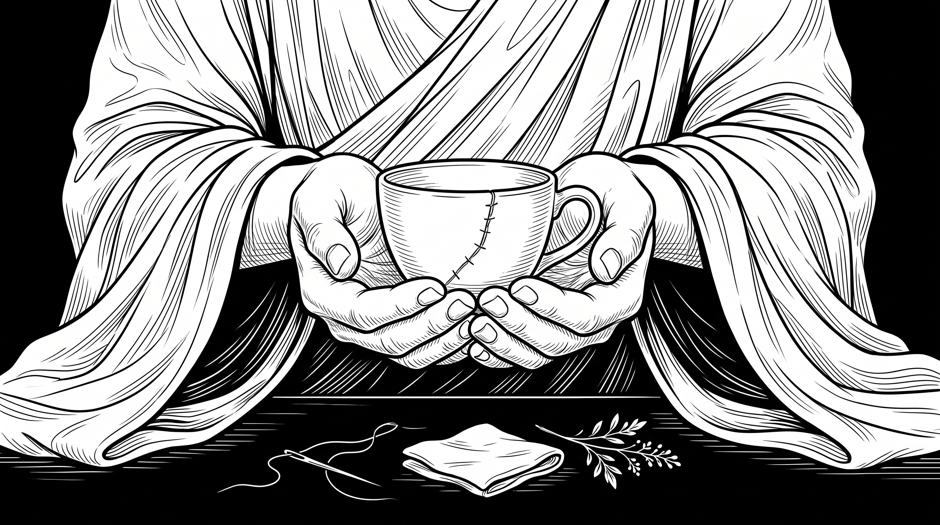
I kneaded bread once at a workshop in Mumbai. I started a small home garden in 2016 and then again in 2019. I painted the rails of house staircase with my father one weekend when I was in the 5th standard. My mother had made me a sweater once. I folded thekuas with my mausis. I fixed my bicycle once when I was thirteen. This handwork is beyond nostalgia. I genuinely believe that people who have done the unpaid handwork move through the world with steadiness others find difficult. An AI model can't give you that because it has no hands. They know things can be repaired. The AI-savvy generation has begun to outsource everything. They cannot tie a good knot. They cannot stitch a button. They cannot cook one dish from scratch. In the next five years, this will be the most common form of helplessness.
3. The sound of your mother tongue
Ae bhai…Kiree? Khabar kheyechis, baba? My parents call be 'bhai.' My elder sister called me 'bhai' which is bengali for brother and my parents picked that up and became my nickname. She still does that when I call her every other day after work.
When you share something personal with an AI model of your choice - a bad day at work, how to deal with your boss, a suggestion to deal with your spouse, some advice on relationship, or even just how you're feeling - you ultimately get clean English. That response doesn't have any roughness. It doesn't have the background noise of the small town, the kitchen hustle bustle, or the tiring exhaustion from the day gone by.
We're losing that slowly. We're losing that the way we lose a friend when we stop calling them. I already crave speaking more Bengali, or in other languages with folks around me. That continuous Hindi mix at work, sending non-Bengali speaking friends voice notes in Bengali are little deliberate windows to take an actual break from digital. Do that more often. It'll keep the inner you warm.
4. The death of someone you loved
This is the hardest one. I was very close to my maternal uncle growing up. He was a big time techie for his time (90s) and I was about eight or ten years old when I discovered his tech magazines. Back then CHIP and Digit magazines were popular in India. I vividly remember him telling me back then that I should eventually pursue a job in Web Designing. Every day when he used to leave for work, I'd sit beside him so he could feed me food from his plate. It used to be the most fun part of my day.
He passed away in 2020 to COVID-19. I couldn't be there. I sank when my mom told me. I still miss him and remember the moments I shared with him. I wish he was around and I'd make him read my blogs or show him the stuff I build.
Anyway, death is the ultimate grounding. The cremation ground, coming back to the house being empty without them, the shraadh meal that follows the small last gestures. People who have been through that experience without checking their phone are different. People who truly lived through those moments by sitting with the body, lighting the diya or lamp every few hours, and going through the agony of having essential energy-providing meal afterwards, are different.
AI models do not have death. They don't have grief. So while they can write a beautiful obituary in seconds and create a poster to put up in the newspaper, it cannot mourn. Any piece of advice you get from an AI model which hasn't experienced death, loss, or emotion of mourning, won't be able to give you real advice.
I'll admit that I have lost some of my fluency in number three. I am working towards it by speaking more of it. It is slow. I haven't taken it too far… haha. The model can speak Bengali to me, technically but the Bengali it can speak is not the Bengali my thakma spoke. There is no kitchen noise in it with mid-sentence, mid-conversation fights with my dadu in it. AI responses will only have correctness. Correctness is not the language though, right? The language is a smell, a slap, a small joke between two old women.
This week, before next Sunday, pick one of the four and do something concrete. Call your mother in your mother tongue and stay on the call for an hour. Sit with an elder and ask them one real question and stay present in the conversation. Cook one thing from scratch.
These will hold you up. These are what you really have.