So look at what we've shipped at Native. In 2023, we launched the first Native RO water purifiers - Native RO M1 & M2. You can read about the journey here. The machine looked good and the few of us who built it - we were really proud. A year or so later, the blue version of our smart lock came out in the market. We named it Cosmic blue. It was a gut call to invest in that colour when the entire market was operating on safe blacks and bronze versions. Fast forward today, we have a lock that looks like… a handle. Just a handle. The new RO is about to launch, and I think it'll hold up.
Risk of sounding snobbish here, but the design is working out. And I keep thinking about why. More importantly, how do we make it work as we grow and scale and the responsibility goes to the team.
It's not that we sat with competitor models on the table and said "isse toh achha toh kar lenge." That's how I've seen teams usually start. I hate that way. The reason was something else, and it's been building in my head for years before some of these products were even briefed.
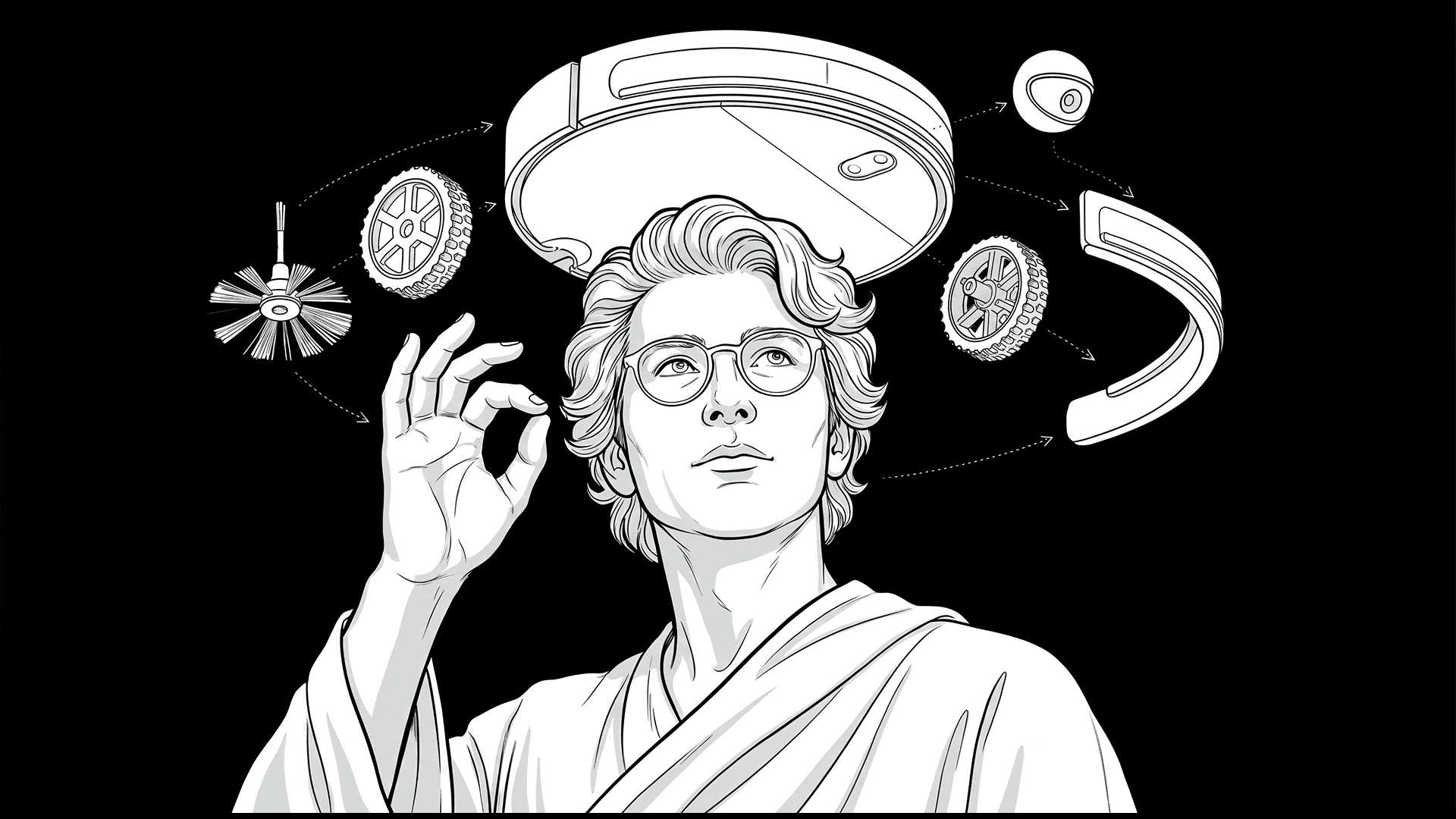
There are pictures in my head. A picture of what an RO should feel like when you walk into a kitchen. I'll rephrase. A picture of what an RO water purifier should be like when I walk into our kitchen. A picture of what a lock should do when your hand hits the handle in the dark. The pictures aren't detailed. They're more like atmospheres. A colour, vibe, feeling, presence, aura… whatever you call it.
I walk into hardware shops, electronics shops, the small-accessory aisles, I pick something up and I'm asking, somewhere in the back of my head, does this fit any of the pictures of products I'm carrying. The ones that do go into a mental file… of sorts. Months later they show up inside a product with no obvious link to where they came from.
And this is what I think the field of design or Industrial design gets wrong about inspiration. They treat inspiration as something you go and find. Mood boards, Pinterest, walks through good showrooms. The assumption is that if you look at enough good things, something rubs off. Right?
It doesn't. Not without the pictures.
Imagine this. There's a chef who's been carrying a half-formed idea for a signature dish in his head for years. One Tuesday morning he's in the market doing the regular run of buying tomatoes, onions, and the usual. He's picking up greens and his eye catches a twig of rosemary. Remember, he's only thinking about what to cook for service tonight. But the way the rosemary is sitting on the others, slightly off-axis, dark green against the lighter ones, something in his head goes still. That's it. He found that missing inspiration for plating his signature dish.
He'd been looking at plating boards for years. He found it picking vegetables for dinner.
Similarly, when designing products like the RO water purifier, the pictures don't come from other RO purifiers. They come from watching users in their homes.
Ok, picture this. A mother making chai at six in the morning. The milk's just starting to climb the side of the pan. Her left hand is on the handle and right hand is doing everything else. Putting sugar in, using the masala dabba, the typical chai making steps. And the whole time her eyes are on the milk. She's not actively focusing on the sugar or the masala. See, none of this is about an RO. But there's ten things her counter is asking of her in two minutes, and the whole kitchen is running on it.
Now think about what that does to the RO. Her eyes never left the milk, right? So the water-level indicator in the RO can't ask her to turn her head. It has to sit at slab-eye level, in her peripheral vision. Her left hand is on the pan handle the whole time, which means the dispense has to work one-handed. A thumb push, the way she took the sugar lid off. She should know it's working without looking. And the flow rate, two minutes ten things, the tumbler has to fill in three seconds. Or the rhythm breaks. The drip tray? That's there because her eyes are on the milk, not the slab. The slab is already wet anyway.
Here's one more. Take Delhi air quality in November. A father is trying to get his toddler to sleep. The purifier in the corner has been on since they got home. AQI was 380 outside when he checked. Now, the fan is too loud for the kid to settle and fall asleep. The father gets up from the bed, walks across the room to put the air purifier in quiet mode. But the buttons on the front of the purifier are dark. Black on black (because, aesthetics) without contrast. It's difficult for him to read which button is which without bending close. He pulls out his phone, switches the torch on, finds the night-mode button and taps it. The fan finally winds down and he walks back to the bed in the dark.
Now what does that night tell you. The control panel was black on black in the half-dark. So the buttons need to backlight the moment a hand comes within arm's reach. He had to walk across the room. So the night-mode toggle can't exist only on the unit. It has to exist on a remote, on a phone, or by voice - anywhere except only on the body. He turned to the phone torch, which is the failure. The fan was loud at default, but the default was set at noon. So the unit needs to know what time it is and step itself down after ten. AQI was 380 outside but he had no idea what it was inside the room. The purifier should display its own indoor reading, on the unit itself, so he isn't opening another app to know what it's doing.
So. None of these moments is about the appliance you're trying to design. But each one is the actual context your product has to land in.
The most important thing to understand is that users don't live around one appliance. They live in a home. Hundred small things they touch in a day, all of that is shaping what feels right and what feels off to them. That's what your product has to fit. If you only study them around your category, the picture you've built is already too small.
So when I said earlier that the Native designs worked out, I don't think the luck is in the design review. The reviews are short and frequent. What goes into them is months and years older.
There's a piece I read recently saying you can engineer luck through surface area. Getting into more rooms lead to more conversations which lead to more chances. And it's true up to a point. But surface area without a picture is just a lot of places you walk through.
The pictures come first.